
Giving Your SFX Real Impact
Interpreting and designing SFX for a Marvel Heroic game involves a delicate balancing act between mechanical utility and thematic richness. At their most basic, these special effects give a hero or villain an extra spark of mechanical heft. Yet they’re not meant to be lifeless modifiers tucked away in a stat block. They’re an opportunity to add personality, flavor, and narrative possibility to every scene. When done well, SFX don’t just help players roll more dice; they remind everyone at the table who these characters really are, what makes them stand out, and why their abilities matter beyond raw numbers.
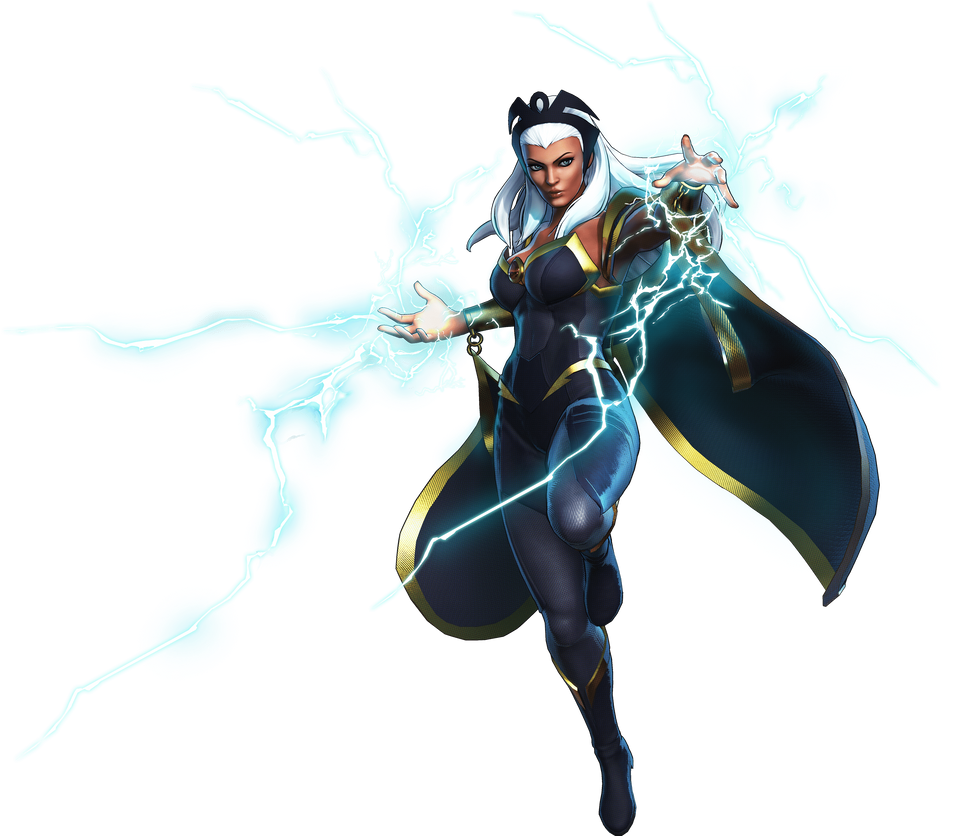
Consider a hero like Storm. It’s easy to say she can create lightning bolts or summon hurricane-force winds, but that doesn’t automatically communicate what it feels like for her to unleash those powers. A well-crafted SFX could capture the majestic, elemental fury of nature bending to her will, or highlight the cost of her power as it strains her focus. You might write something that allows her to spend resources to create sudden downpours that hinder enemies, or pull lightning from a clear sky for an unforgettable finishing strike. The mechanical benefits remain in the background; what’s front and center is the sense of awe and the story beats those SFX create. Suddenly, Storm isn’t just another hero with an energy blast. She’s the living embodiment of the weather’s wrath, and you feel that when her SFX hits the table.
This principle applies to any character, from street-level vigilantes to cosmic beings. If you’re working on SFX for Daredevil, you might highlight the way his enhanced senses help him anticipate an opponent’s next move or navigate darkness with uncanny precision. Instead of simply granting a static bonus to a roll, you could tie that bonus to specific story elements: maybe Daredevil can spend a resource to automatically detect hidden threats, or disarm a trap before anyone else even knows it’s there. This approach ensures that when Daredevil uses that SFX, everyone is reminded that he’s more than just another martial artist—he’s a man with senses so sharp that darkness becomes his ally, and danger has no hiding place.

It helps to think of each SFX as a narrative signature. When the character invokes it, the scene should shift in some unique and memorable way. That might mean the arena changes—perhaps when a character like Magik taps into her SFX, the very environment warps into something closer to Limbo, making everyone reconsider their approach. Or Iron Man’s suit hums with extra power as he reroutes energy to his repulsors, momentarily blinding everyone in a flash of blue-white light. The specifics depend on your table’s style and the character’s concept. It isn’t about piling on random benefits, but about creating moments that say, “This is what makes this character special.”
SFX can also reinforce a character’s flaws or highlight their growth over time. Imagine a hero who wields unstable cosmic energy. Their SFX could offer a powerful effect at a price: roll extra dice but watch out for backlash if things go wrong. Every time the player uses that SFX, they’re making a conscious choice to flirt with disaster, underscoring the character’s constant battle to keep their powers in check. Players who enjoy pushing their luck will relish these tense decisions, while the group gets to see the hero’s struggle play out in real time.
It’s often effective to tie SFX to your character’s backstory, aspirations, or personality traits. If a character has a reputation for being ruthless, consider an SFX that only triggers when they show no mercy, dealing extra stress to an already weakened foe. If another character is known for their protective instincts, maybe they can activate an SFX to shield an ally from harm, drawing the fire onto themselves. Every SFX can be a subtle nudge encouraging players to lean into the core themes that make their heroes and villains who they are. This makes it easier for everyone at the table to remember why a character acts the way they do and what they stand for, because their mechanical options reflect that identity.

SFX can also serve as a form of storytelling currency. Instead of an SFX that grants a flat benefit, consider one that triggers after a narrative milestone occurs. If a hero vows never to harm an innocent, maybe they gain access to a potent SFX after they hold true to that vow in a difficult situation. Or if a villain thrives on chaos and must break something valuable to gain power, an SFX could reflect that need by growing stronger with each new act of mayhem. Not only does this create a mechanical incentive to pursue certain storylines, it also ensures that these special effects remain woven into the fabric of the ongoing narrative.
Players and Watchers can collaborate to fine-tune SFX so that they evolve alongside the characters. Early in a hero’s career, their SFX might be raw and risky. Over time, as they gain confidence and control, the SFX can shift to something more refined or versatile. This can mirror the character’s journey. Perhaps a hero starts out barely able to contain their magical powers. Early SFX revolve around wild, unpredictable bursts of energy. Later, after facing countless challenges, those same SFX become more reliable tools that can be shaped precisely when needed. This lets the group feel the character’s growth mechanically as well as narratively.
Sometimes it’s tempting to pile on too many mechanical perks into a single SFX, but more isn’t always better. The best SFX tend to have a clear purpose and a distinct personality. One or two well-defined benefits and a meaningful limitation can say more than a laundry list of small bonuses. Focus on the feeling you want the table to get when that SFX triggers. Is it shock and awe? Is it relief as a hero rescues their allies at the last moment? Is it dread as a villain reveals their true power? By prioritizing emotional impact over complexity, you ensure the SFX resonates.
When in doubt, remember that an SFX should always tell a story. It’s not enough that it helps you win a fight. It should make that fight feel different from every other fight you’ve had at the table. It should give the players something to picture, something to talk about after the dice stop rolling. The stories we remember most are the ones where characters feel alive, and their abilities play a big part in that. Think back to iconic comic book panels you’ve read. You remember them not just because the hero won or the villain lost, but because of how it felt when that power was unleashed. Maybe it was a dramatic splash page of Thor summoning lightning, or a small, tense scene where Spider-Man uses his spider-sense to save a loved one at the last possible second. Try to capture that same drama and place it right into the mechanics.
Over time, as you experiment with creating and using SFX, you’ll get a feel for what makes them shine. You’ll notice players reacting more strongly to those that reinforce the character’s role in the story. When a villain uses a signature SFX to escape just as the heroes close in, it’s not just a mechanical benefit—it’s a storytelling moment that gets everyone invested in catching them next time. When a hero’s SFX perfectly aligns with a character moment—like finally tapping into their inner strength at a crucial point—everyone around the table will remember it. In that way, SFX aren’t just tools. They’re invitations to make the story richer, deeper, and more emotionally charged.
If there’s one piece of advice to keep in mind, it’s that SFX should always leave a mark on the narrative. They remind everyone that these characters aren’t interchangeable sets of powers. They have histories, personalities, fears, and dreams, and all of that can be expressed through how their abilities take shape at the table. A good SFX might tip the balance of a conflict, but a great SFX also leaves everyone with a story they can’t wait to continue telling.
About Mark


 Marvel Plot Points